How it works · The wedge
One thread from lead to handover — no re-keying.
Most EPCs run a solar deal as three tools and a chain of exported spreadsheets — sales in one place, engineering in another, delivery in a third, with someone re-typing the project at every border. Voltara runs it as one thread: the record a salesperson opens on the first call is the record the engineer designs against and the record the project is delivered from.
§01 · THE SIX STEPS
Follow one deal down the thread
Six steps, one record. Nothing is exported, attached to an email, or typed twice.
- 01
The lead lands in the CRM
A 13-stage pipeline built for how solar actually sells. The stage dossier collects 60+ structured fields as the deal progresses — contact, site, consumption, commercial terms — each captured once, at the stage that needs it.
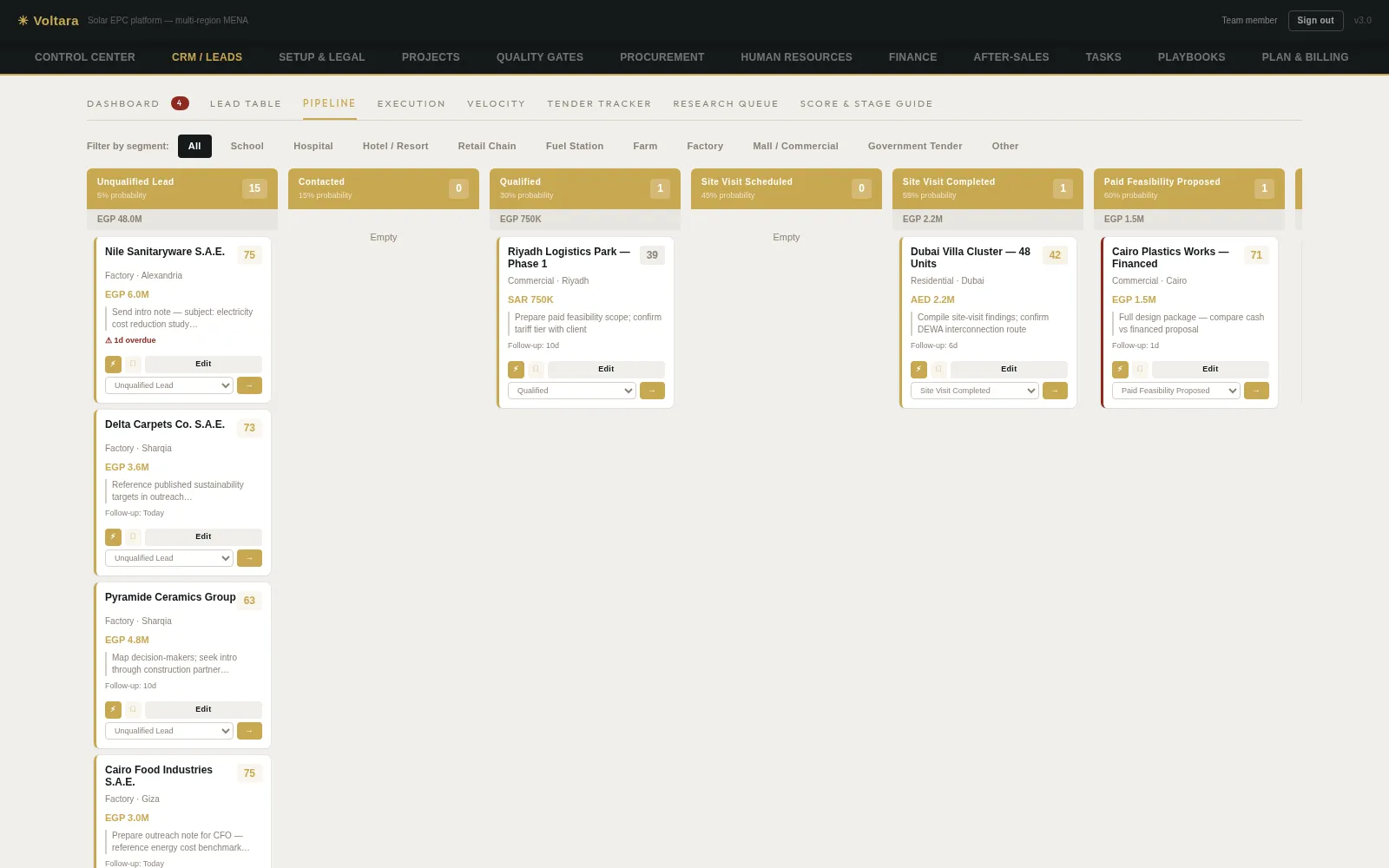
Step 01 — the lead on the pipeline board - 02
A first price in two seconds
From the basics already in the dossier, the quick estimate prices the system while the prospect is still on the phone. Every estimate is watermarked “preliminary — engineering review pending” — a directional number that qualifies the conversation without masquerading as an engineered one.
- 03
“Open Designer Studio” — every field pre-seeded
One button on the lead opens the design studio with the dossier’s structured fields already in place. The engineer starts refining a design, not re-typing a form — zero re-keying at the sales-to-engineering border.
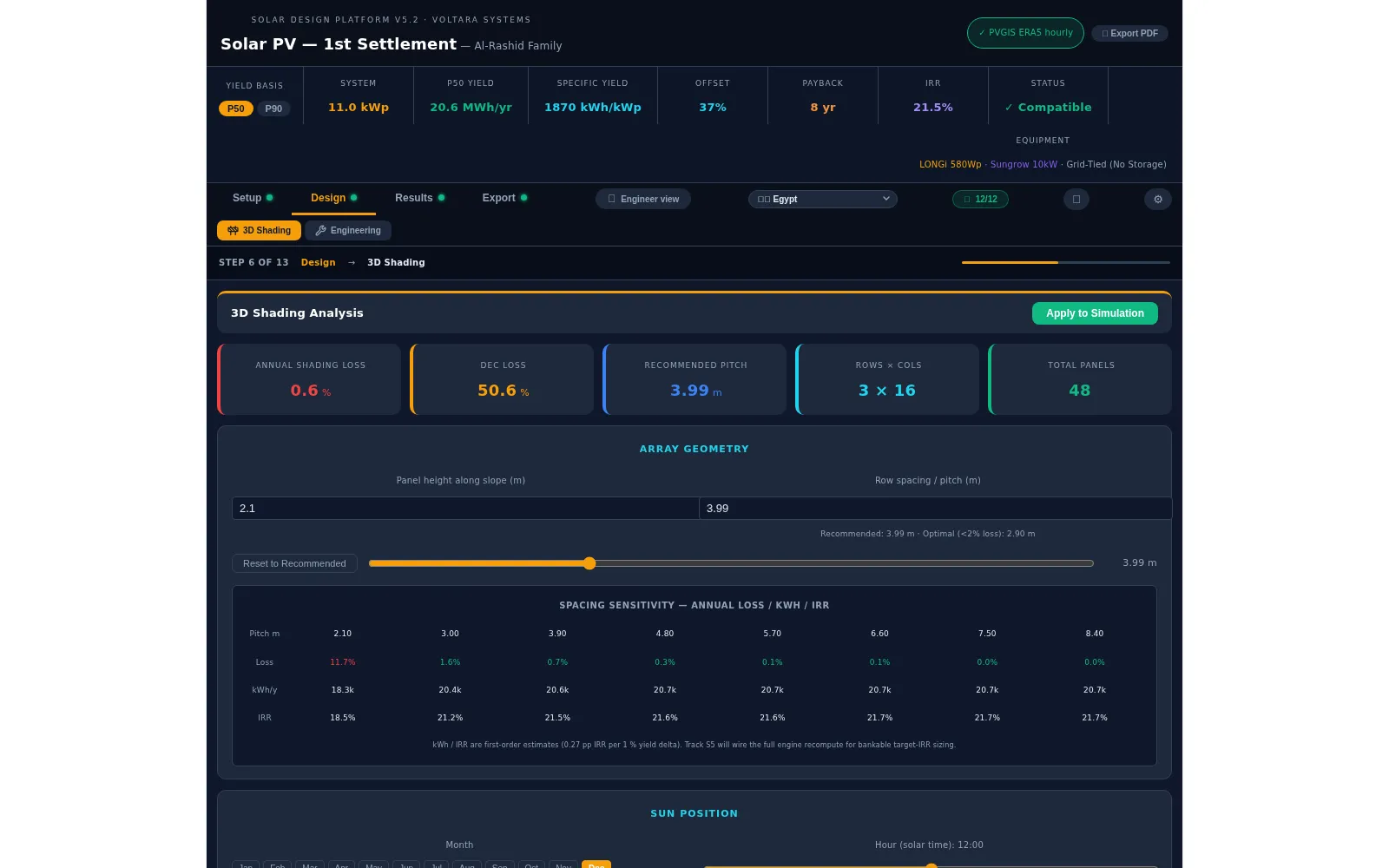
Step 03 — the studio, seeded from the lead - 04
The engineer refines — and hits “Send to CRM”
In the studio the directional estimate becomes a real design: the 8,760-hour simulation, the optimized layout, the 25-year cash flow. When it is done, one button sends the package back along the thread.
- 05
The proposal lands on the lead
The proposal PDF, the SLD, the costed BOM and a design snapshot attach to the lead. A diff banner shows sales exactly which values engineering refined — and sales accepts or rejects them explicitly, so the CRM never silently disagrees with the design.
- 06
Won creates the project
Marking the deal Won auto-creates the project with the artifacts attached. The 8-state delivery machine takes over from there — and the site team builds from the proposal the client actually accepted.
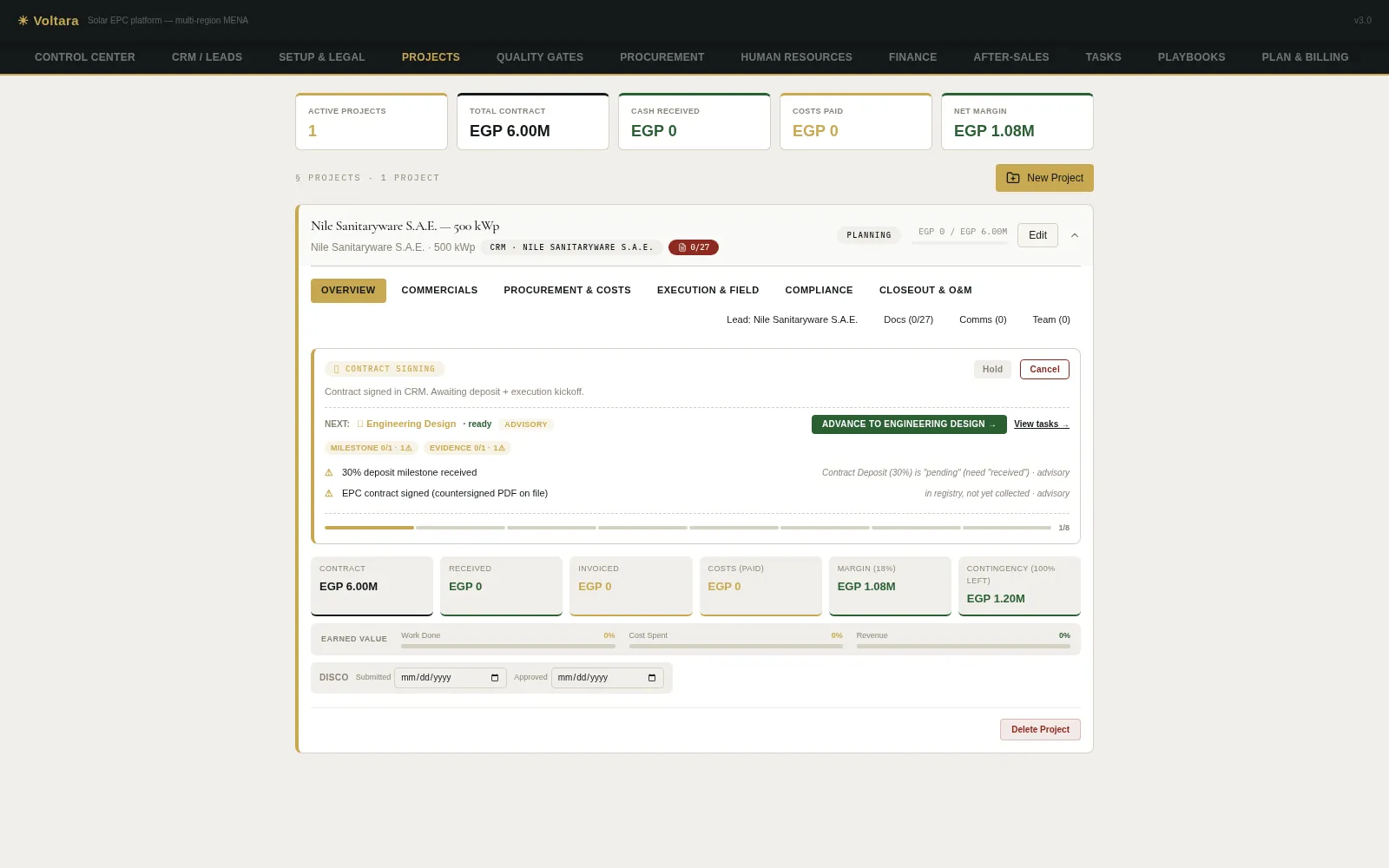
Step 06 — the project, created from Won


§02 · THE HANDSHAKE
Not copy-paste. A protocol.
The CRM and the studio are separate applications — they talk over a versioned handshake protocol, not a shared spreadsheet or a screen-scrape. The field set is structured and allowlisted: each side knows exactly what it may send and what it may receive, and the version is pinned so the contract cannot drift silently between releases.
The handshake is a versioned protocol — structured, allowlisted fields. Not copy-paste.
§03 · THE COST OF RE-KEYING
What the spreadsheet glue actually costs
Without the thread, every border between teams is a transcription job:
- Design-only tools stop at the signed contract — the design gets exported, and someone re-types it into whatever runs delivery.
- Generic CRMs do not know what a roof, a tariff or a string is — so engineering keeps a parallel file, and the two quietly drift apart.
- Spreadsheet glue forks the truth: every copy is a version, every version is a question, and the answer is usually a meeting.
The wedge removes the borders instead of policing them. One record moves down the thread, the artifacts travel with the deal, and nothing is typed twice.
Watch the thread run on one of your own leads.
Demos are founder-led. Bring a live prospect and we will run it end to end — first call to watermarked estimate, studio design to bankable proposal, Won to project.
Book a demo Wedge Bundle — see pricing
The full wedge — the 13-stage pipeline, the studio handoff and Won-to-project automation — is included in the Wedge Bundle. See pricing for the figures.